Tampilkan postingan dengan label wertzone classics. Tampilkan semua postingan

Senin, 12 Agustus 2013

Wertzone Classics: The Lord of the Rings - The Fellowship of the Ring

Sixty years ago, the Hobbit Bilbo Baggins came into possession of a magic ring. When he decides to leave his home in the Shire and retire, he finds it curiously difficult to leave the ring behind. Disturbed, the wizard Gandalf investigates and discovers that Bilbo's trinket is actually the One Ring of legend, which the Dark Lord Sauron needs to complete his return to power. Bilbo's cousin Frodo has to take the Ring on a long and arduous journey across Middle-earth to the volcano known as Mount Doom, deep within Sauron's land of Mordor, the only place where it can be destroyed.


Back in 1999, when Peter Jackson began filming The Lord of the Rings, there was an expectation of failure. A thousand-page-long book adapted into three three-hour movies by a director whose biggest previous movie had been a minor ghost comedy starring Michael J. Fox? And on a budget of only $90 million apiece at a time when $200 million+ budgets for such epic films were becoming more commonplace? It seemed like a recipe for disaster.

Against the odds, Jackson pulled it off. The trilogy as a whole is a remarkable work, translating Tolkien's vision onto the screen with - for the most part - respect and integrity. There are missteps, mistakes and some ill-conceived changes, but these are mostly restricted to the second and third films in the sequence. The Fellowship of the Ring, on the other hand, is moved from page to screen with enviable skill.

The main key to the film's success is the casting. Elijah Wood may be a lot younger than Frodo in the novel, but he sells Frodo's mix of book-learned wisdom with a lack of practical experience with wide-eyed enthusiasm. Representing the old guard, veteran actors Ian McKellen, Ian Holm and Christopher Lee bring their roles of Gandalf, Bilbo and Saruman to life with presence and gravitas. The actors are pretty much all excellent, even Cate Blanchett as she struggles with a curiously-written interpretation of Galadriel. Marton Csokas is probably the film's weakest acting link as Celeborn, but given he has about twenty seconds of screentime, this is not a major issue. I must also admit to not being altogether convinced by Viggo Mortensen as Aragorn the King, but as Strider the Ranger in this first film he is superb.


In terms of scripting and changes from the books, some key sequences are missing. Tom Bombadil is gone (which is a wise move), as are the barrow-wights (which is more regrettable) and other elements are compressed (the journey from the Shire to Bree, which covers dozens of pages in the book, happens instantly on-screen) or eliminated altogether (Fatty Bolger, the 'Fifth Hobbit', is exorcised from events). Other events that happened in the book off-page or only in flashback occur here in their correct chronological order, such as Saruman's confrontation with Gandalf at Isengard.

For the most past these changes are well-judged, even if some fan-favourite moments are left out. For a three-hour movie the pacing is generally excellent, with a good mix of exposition, character-building moments and action setpieces. The movie's effects are impressive, with CGI being held back and used only when absolutely necessary, with miniatures often employed to give physical locations a sense of presence and weight. Whilst clearly resulting from budgetary restrictions, this prevents the film getting buried under fake-looking CGI and means it still has more convincing effects than the recent first Hobbit movie, which feels a little silly.


It's difficult to pick a stand-out moment from the film. The Black Riders pursuing the Hobbits is an evocative moment, as is the confrontation on Weathertop and the flooding at the Fords of Bruinen. The outstanding sequence is probably the descent through Moria, which features both excellent character moments (such as Gandalf's conversation with Frodo when they discover that Gollum is pursuing them), humour (Pippin's encounter with a skeleton on a well), action (the battle with the cave troll in the chamber of Mazarbul) and tragic horror (Gandalf's last stand on the bridge of Khazad-dum). The whole sequence is a joy to watch.

The film missteps a little near the end: the trip to Lorien, where the Fellowship regroups after Moria, made sense in the book but in the film it dangerously comes close to killing the pace of the movie altogether. This is not helped by the somewhat bizarre characterisation of Galadriel. Jackson is to be commended for trying to make the longueur work, but ultimately it feels like it's delaying the film's climax too much at the moment it should be ramping up towards it. Fortunately, in the cinematic edition it's a fairly brief sequence. Events culminate in the epic battle on Amon Hen, with Sean Bean delivering a stand-out performance during Boromir's last stand and Sean Astin's Sam getting his first notable moments in the film's cliffhanger ending.

The movie's success is furthered by some truly remarkable production design and the quite astonishing soundtrack by Howard Shore, which must rank as one of the finest movie soundtracks of all time.

The Lord of the Rings: The Fellowship of the Ring (*****) remains, twelve years on, the finest fantasy movie ever made. The writing, acting and effects work all combine and work in tandem with one another to produce something very special, something that Peter Jackson has struggled to replicate ever since. The film is available now in the UK (DVD, Blu-Ray) and USA (DVD, Blu-Ray).

Note on the Extended Edition: In 2002, the film was reissued as an Extended Edition with approximately 30 minutes of additional footage integrated into the movie. These extra sequences include (amongst many others) an expanded opening sequence about Hobbits, additional scenes at Bilbo's party (reintroducing the Sackville-Bagginses from the book), additional combat scenes on Amon Hen and a major extension of the Lorien sequence. The Extended Edition is remarkably well-integrated with the structure of the existing film and gives new information that is useful for the sequels (such as the gift-giving sequence at Lorien). However, it does also expand on the film's weakest elements, with more screentime for Celeborn and Lorien overall. Whilst this does adversely affect pacing, it is more than made up for by the strength of new scenes earlier on. As a result, the Extended Edition (*****) retains the score of the cinematic cut. It is also available now in the UK (DVD, Blu-Ray) and USA (DVD, Blu-Ray).

Sabtu, 11 Mei 2013

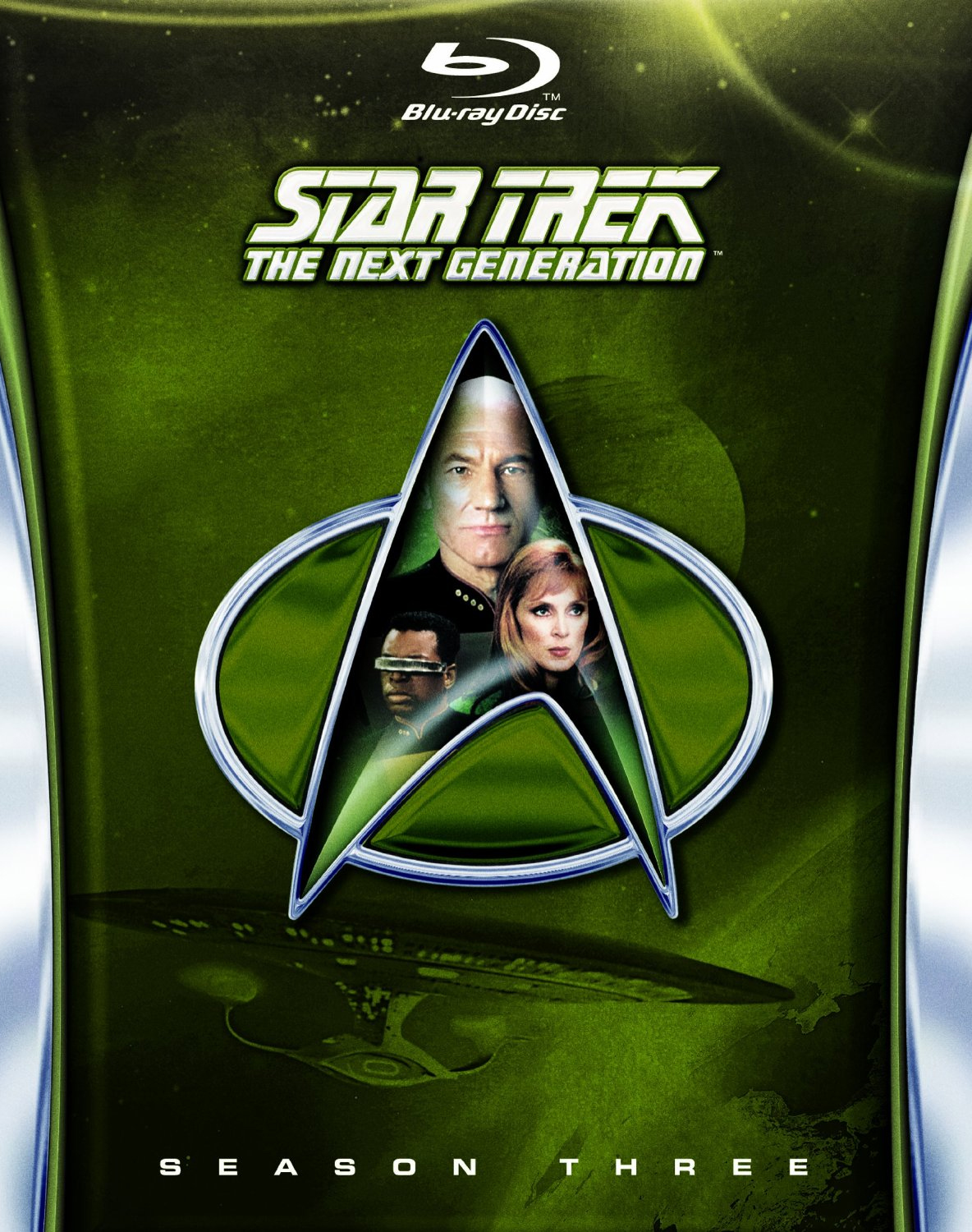
Wertzone Classics: Star Trek: The Next Generation - Season 3 (remastered)

When Star Trek: The Next Generation entered its third season, it was in trouble. The critical reception to the show's second year had been mixed, producer and effective showrunner (under Rick Berman) Maurice Hurley had left and the cast were unhappy with the removal of Gates McFadden as Dr. Beverly Crusher. As the third season opened, Rick Berman had to hire a largely new writing team, a new showrunner and had to bring back McFadden to appease the rest of the cast (particularly Patrick Stewart). Fortunately for his show and for the fans, Berman was lucky. The new showrunner was the talented Michael Piller and amongst the new writers were the young and energetic Ira Steven Behr, Rene Echeverria and Ronald D. Moore, all of whom would go on to define Star Trek for many years to come.


Because of these changes, Season 3 was produced in a state of chaos. Scripts were being completed mere days before filming, leaving little time for pre-production. This can be seen in the reduced amount of location filming this season, with almost no time to book location shoots ahead of filming. However, there's a noticeable improvement in special effects thanks to the introduction of new, smaller and easier-to-shoot filming models of both the Enterprise and the Romulan warbird (which makes several appearances). New, considerably more comfortable uniforms are also introduced, to the evident comfort and relief of the actors.

But what really makes the season work is the superior writing. Piller was keen to introduce more scenes of character interaction and development to the show. The guest cast are moved away from being the centre of the show, with their impact on the regular characters being more important. There's more continuity, with a recurring Romulan threat throughout the season (The Enemy, The Defector, Tin Man) and Worf's Klingon background being developed more thoroughly (Sins of the Father). Having been proven to be a sentient being in Season 2's excellent The Measure of a Man, Data's evolution continues through several episodes before peaking in The Offspring, where he tries to build a new android 'daughter'. Comedy is allowed freer reign, particularly in Deja Q, Captain's Holiday and Menage a Troi, which all feature a few good laughs (Deja Q may be the funniest episode the show ever did).


But the third season's strong reputation relies on its two absolute stand-out, inarguably, stone-cold classics. Yesterday's Enterprise is a time travel story involving parallel universes which remains fully comprehensible, features one of the best space battles the show ever did and finds an intelligent and non-cheesy way of bringing back Tasha Yar. The writing is strong, with lots of moments of subtlety (the alternate Riker and Picard don't get on) and some impressive production values and details, such as the revamping of the Enterprise bridge.

At the end of the season we also get The Best of Both Worlds, the show's first season cliffhanger and still the best one Star Trek's ever done. The return of the Borg, the outstanding music, the character interplay between Riker and newcomer Shelby, the effects and the doom-laden, hopeless atmosphere combine to make for one of the franchise's finest hours.

Conversely, there are only a few weak moments in the mix. The Price, The Vengeance Factor and The Most Toys are quite dull, whilst The High Ground is a commentary on the Northern Ireland Troubles which misfires completely due to the writers' poor understanding of that conflict. Who Watches the Watchers? sabotages a good premise and some excellent Enterprise scenes with some dull guest cast performances. But it's more surprising how good the show has become compared to the first two seasons, with even minor episodes like The Survivors and The Hunted coming to life and being enjoyable in a way the smaller stand-alones of the first two years struggled with.


On a technical basis, the HD upscaling of the show is again amazing, with the same team that handled Season 1 doing the job. That means some more beautiful 3D planet renders, some outstanding effects recreations and superior reproductions of the show's colours (Season 3 is more colourful than the first two seasons). After the slightly disappointing Season 2 upgrade (the company responsible for that is not being re-used, interestingly), the S3 update is even more astonishing. For a season that was driven so much by writing changes, the extra features do a great job of focusing on the writing team and how they went about creating the best show possible and avoiding the mistakes of the first two years.

Ultimately, the third season of Star Trek: The Next Generation (*****) is outstanding. The writers, actors and crew are all on the top of their game, dragging the so-so show of the first two seasons up in quality to become something truly impressive. The season is available now in the UK and USA.

Minggu, 16 September 2012

Wertzone Classics: Deadwood Season 1

1876, the Black Hills of Dakota Territory. The discovery of gold has inspired thousands of people to break a treaty with the natives and flock to the area to prospect. The camp of Deadwood has been established to cater for their needs and is rapidly expanding into a large town. In such circumstances there lies opportunity, and the criminally-minded Al Swearengen, wanted for murder in Chicago, has set up his own saloon to cash in on such opportunities.


Swearengen's operations are complicated by the arrival of the noted Wild West figures Calamity Jane, Wild Bill Hickok and Charlie Utter, as well as the establishment of a rival hotel and casino across the road from his own joint and the arrival of a former Montana marshal, Seth Bullock, who is looking to open a hardware store. With native attacks still a threat and a cholera outbreak striking the town, Deadwood needs to negotiate some perilous waters if it is to survive.

Deadwood is widely considered to be one of the jewels in HBO's crown. Running for three seasons from 2004 to 2006, the series has attracted critical acclaim matched by perhaps only two other shows in TV history: The Sopranos and The Wire. Unlike those shows, Deadwood was not able to complete its planned storylines and ended prematurely in 2006 for reasons that are still disputed between the show's creator and the studio.

The first season establishes the basic premise of Deadwood: the depiction of the slow metamorphosis of the settlement from a mining camp to a proper Western town. In the first episode, the town is shown to be lawless and almost anarchic. Over the course of the season the institutions of law, order and governance come into being, with in some cases the corrupt figures of the early episodes becoming 'respectable' figures in the new order. This shift is marked by one particular murder, which has significant ramifications for the town and its future. This gives the first season its thematic structure, the arising of order out of chaos.

The writing is exemplary, with David Milch and his writers (although Milch effectively rewrote every script in the season himself) creating a cadence rooted in both historical accuracy and also in getting across the feel of the period. The high levels of modern swearing, for example, are not particularly accurate but Milch felt this was necessary as the contemporary curse words would not resonate with a modern audience. This also extends to the general accuracy of events. Many of the show's characters are real historical figures, with their activities being a mixture of historically real events, real events that have been condensed or moved around in time for dramatic effect, and totally new scenes that better illuminate the characters and themes of the series. If there is a problem in the writing it's the lack of consistency in the use of some devices: E.B. Farnum's tendency to slip into monologue is rather intermittent, for example. Otherwise it's rich, textured and often amusing.

Performance-wise, the show features excellent turns from the likes of Timothy Olyphant (as Seth Bullock), Keith Carradine (Hickok), Paula Malcomson (Trixie), Doc Cochran (Brad Dourif) and Molly Parker (Alma Garret), but it revolves around Ian McShane in the role of Swearengen. Swearengen sits at the heart of the series, affecting events around him, like a particularly profane spider in his web. McShane, previously best known as the title role in the easy-goin' British detective series Lovejoy, is a revelation in this role, bringing phenomenal presence and menace to the screen. The characterisation of all of the characters is particularly accomplished, with a real focus on making them real, conflicted people. For example, a bald surface reading of the show would cast Olyphant's Seth Bullock as the hero, standing up to the villainous Swearengen, but in fact the two characters are also shown in the opposing role as well, such as when Bullock loses his temper and almost beats someone to death in a disproportionate response to a threat, whilst Swearengen shows mercy - albeit of a rough kind - and kindness to a desperately ill member of the community. This layering extends to all of the characters, making them much more compelling.

Production values are impressive, with huge sets depicting the town and its interiors. It isn't an action-packed series, with considerably more talking than shooting, but when things do go off, they go off in style.

Flaws are almost non-existent. Some events feel somewhat random, but this may be down to the show being as interested in depicting moments showing day-to-day life in Deadwood as it is in ongoing story arcs. In fact, arguably the most successful episode of the first season is the tenth, which shows a typical 'day in the life' of the town aside from all of the other ongoing shenanigans.

The first season of Deadwood (*****) lives up to the show's reputation and billing as a gripping, entertaining and highly compelling drama series showing the realities of life in the West. The series is available now in the UK (DVD only, so far) and USA (DVD, Blu-Ray).